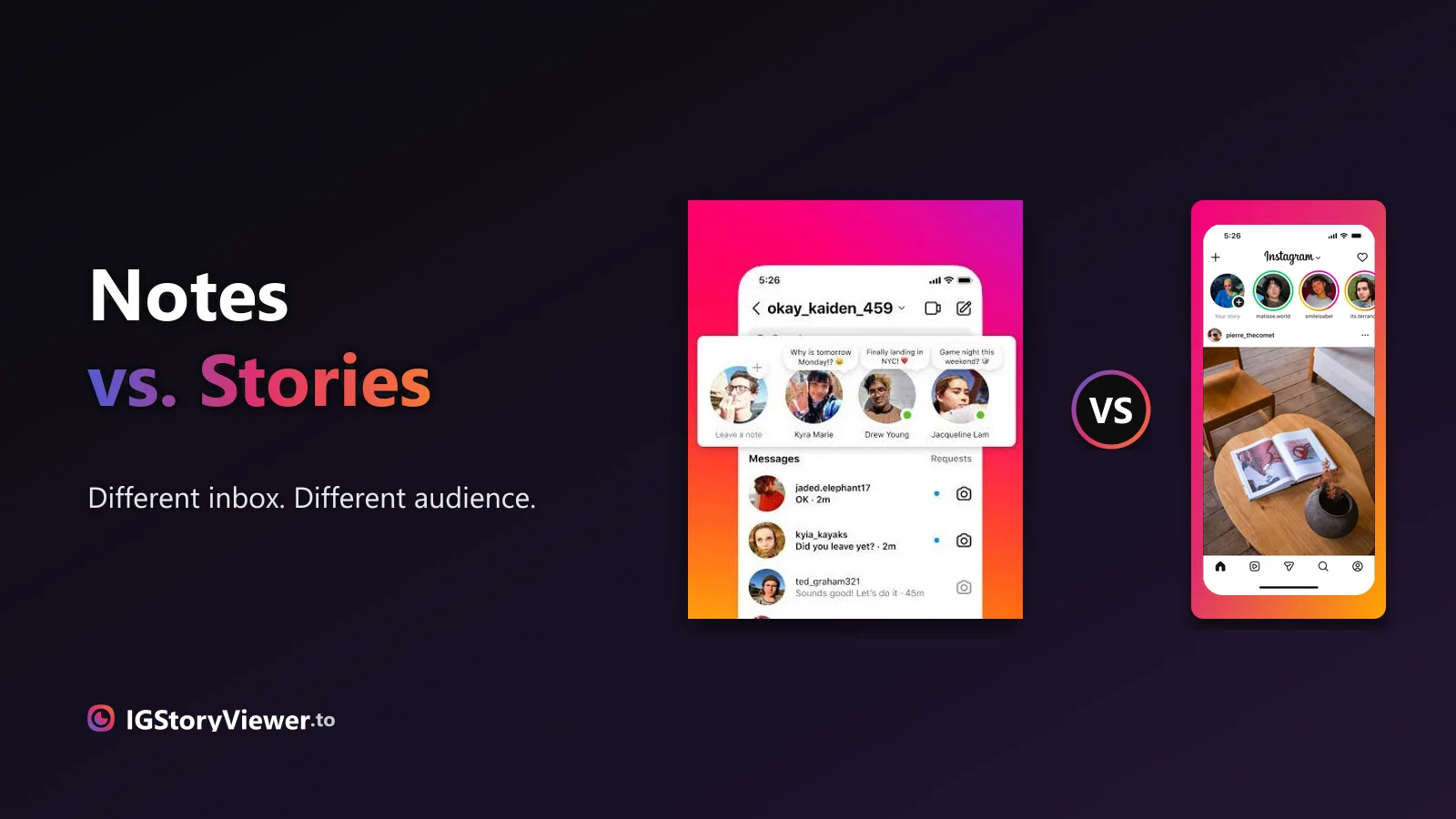
Instagram Notes vs. Stories: What's the Difference and Who Actually Sees It
A Note lives above your DM inbox and disappears in a day. A Story lives in the main feed. Here's what actually separates them.
 IG Story Viewer TeamSeptember 26, 20266 min read
One clip, three formats, three different outcomes. Here's what actually separates a Story, a post, and a Reel — and how to pick without guessing.
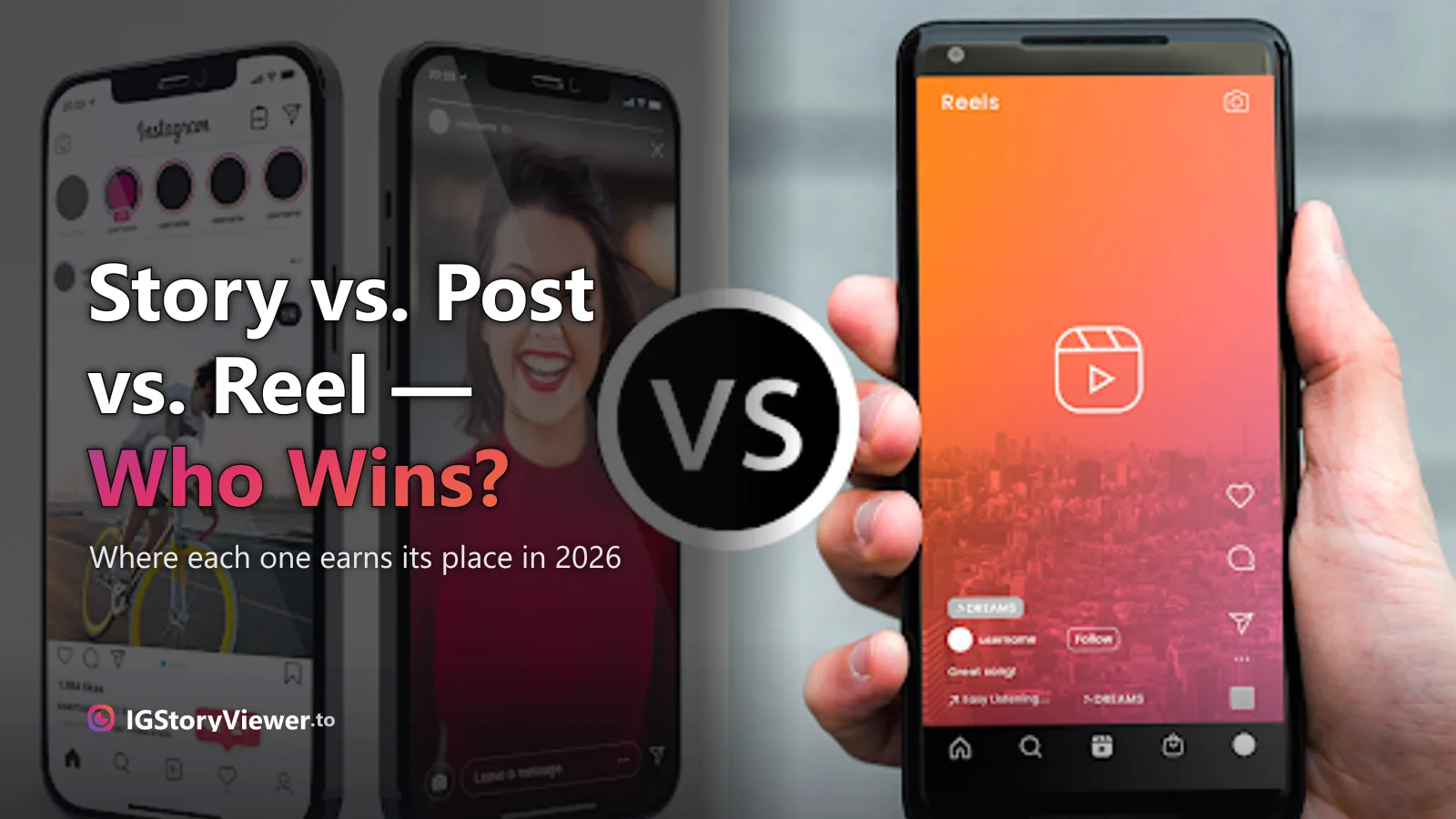
You've got one clip — a product shot, a behind-the-scenes moment, a launch announcement — and three different places to put it. A Story, a feed post, and a Reel each do something different with the exact same file, and posting it to the wrong one is often why content just... disappears.
Here's what actually separates them — not the marketing-speak version.
A Story is built to be temporary and casual — it sits at the top of the app, in front of people who already follow you, and it's gone in 24 hours unless you rescue it. A post is built to be permanent — it lives on your grid, it's what a new visitor judges first, and it's still there in a year. A Reel is built to travel — Instagram actively hands it to people who've never heard of your account, which is the one thing neither a Story nor a regular post reliably does.
None of that makes one format "better." It makes them suited to different jobs — which is the actual decision to make before you post anything. (If you want a feel for how a Story reads once it's actually live, our story viewer shows any public account's current Story at full size, no app required.)
| Story | Mostly your existing followers | 24 hours (or pinned to Highlights) | Low — quick and forgiving | Daily updates, polls, behind-the-scenes, driving DMs |
| Post | Followers, plus hashtag/Explore search over time | Permanent, on your grid | Medium — worth a clean caption and cover | Anything that should still make sense to a stranger a year from now |
| Reel | Followers *and* non-followers — actively pushed by Instagram | Permanent, but momentum is front-loaded | High — editing, pacing, and sound all matter | Growth: reaching people who don't already follow you |
A Story mostly reaches people who already tapped "follow." Outside of a hashtag or location sticker occasionally surfacing it wider, it's a conversation with your existing audience, not a growth tool. A post can pick up extra reach over time through hashtags, tagged locations, and Explore, but it's still leaning on people who search or already follow related accounts. A Reel is the outlier: Instagram's recommendation system actively pushes it into the Reels tab of people who don't follow you at all, based on what they've engaged with before.
That's the trade-off in one sentence: Stories are for depth with people who already know you, Reels are for reach with people who don't, and posts sit in the middle — permanent enough to matter, but not pushed the way a Reel is. Exactly how much Instagram pushes any given Reel shifts as the algorithm changes, so treat this as directional rather than a fixed formula.
A Story's default lifespan is 24 hours — Highlights is the only thing that extends it, and only on your own profile. A post never expires; it's sitting on your grid whether someone finds it today or two years from now, which is exactly why a post is the right call for anything you'd want a brand-new visitor to see. A Reel technically never expires either, but its momentum is front-loaded — most of the views it'll ever get usually land in the first few days, then it settles into occasional Explore and hashtag traffic.
The fix for a Story worth keeping is simple: pin it to a Highlight the moment you post it, not after it's already expired. Once the 24 hours run out, that window closes — there's no recovering it back into a Highlight afterward.
Reach isn't the only signal worth caring about. A Reel is the easiest of the three to share into someone else's DMs or repost to their own Story — it's built as something you forward, not just watch. A post is the one people actually save, since a save is a deliberate "I want to find this again" action, and a post is the easiest of the three to find again later. A Story gets the most direct replies, because the reply field is right there and answering feels like texting, not commenting publicly.
None of these show up on your profile the way a follower count does, but they're the quieter signals that tell you which format is actually resonating with a specific piece of content.
Three quick filters, one per format:
It's time-sensitive, casual, or meant for people who already follow you — a poll, a behind-the-scenes moment, a same-day update.
It should still make sense to someone finding your profile cold, months from now — a launch, a portfolio piece, anything worth keeping on the grid.
The goal is reaching people who don't already follow you. It's the growth lever of the three, not just a way to keep current followers updated.
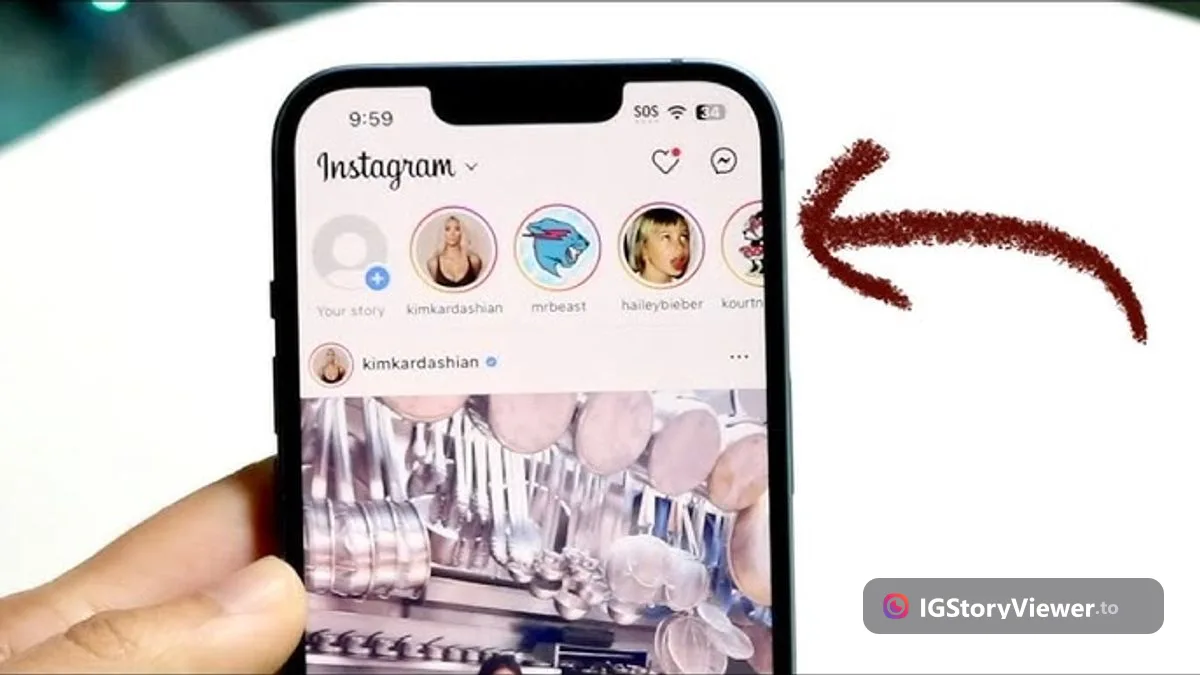
You don't need three separate pieces of content. Shoot vertical from the start — the same clip that works as a Reel drops straight into a Story, and a clean frame from either one makes a fine post. What changes is the wrapper: a caption built for search and permanence on a post, a quick sticker or poll on a Story, trending audio and pacing on a Reel.
If you're regularly moving the same clip between formats, the exact dimensions and safe zones each one needs are worth bookmarking — nothing kills a repost faster than Instagram cropping your subject out of frame.
And once you're posting across all three regularly, the metrics actually worth checking will tell you a lot faster than guessing whether a format is working for your account specifically.
Open any public account's current Story in your browser — the same place it actually lives, at full quality, no login required.
We build a free, anonymous Instagram story viewer and write practical guides on watching, saving, and understanding Instagram stories — without the hype.
More about usA Note lives above your DM inbox and disappears in a day. A Story lives in the main feed. Here's what actually separates them.
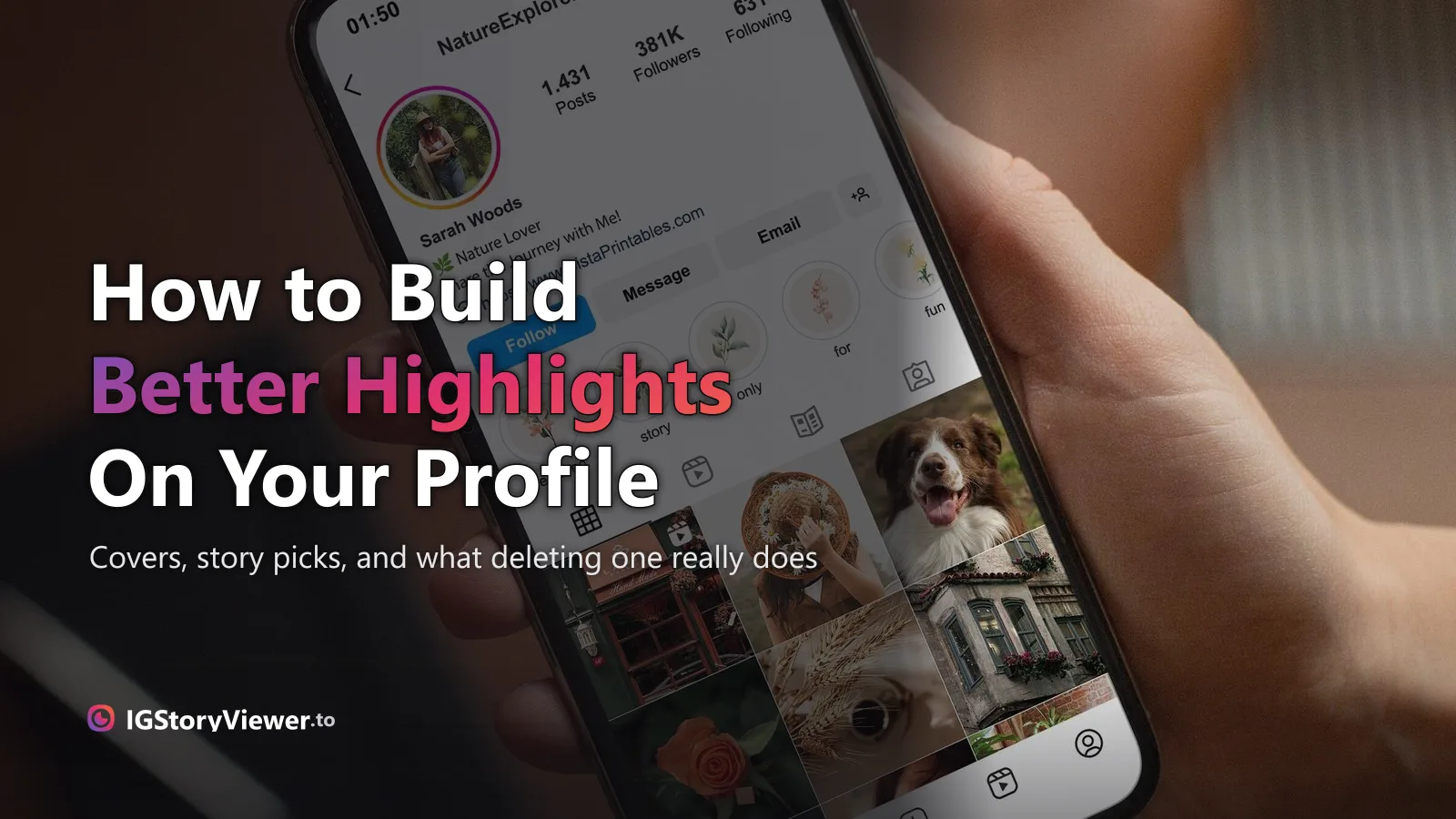
The row of circles under your bio is simpler to build than it looks — here's how to create one, design a cover that matches, and edit it without losing anything.